The Most Difficult 8 Weeks I Can Remember
What happened after I got laid off on a work visa.
We came home from an amazing road trip on the East Coast and planned to stay in a hotel for a week or two while we found a new place to live. The next morning I got laid off. This is what the eight weeks after looked like.
Thursday, August 13. 9 a.m., first order of business, the recurring call with my boss, nothing unusual about it. Then: “We’re letting you go.” A reduction in force, cuts across the company, nothing personal. I’d been there since August 2022, two years as a contractor and two as an employee. It ended in about 15 minutes.
It was a huge shock. How could they let me go? I had worked with so many teams, and we had built so much side by side. Our tools improved solar project designs, the sales process, and made workflows more efficient. The news took a while to sink in.
We had just come back from nearly three months on the road on Wednesday evening. The plan was to stay in a hotel for a week or two, find a new place to live and get ready for the new school year. My wife Lily had taken the kids to a friend’s place. I got on my bike and rode over. When I got to Lily, I told her: “I have nothing else to do today. I got laid off.” Our friends were very kind about it. We sat on their porch in silence, mentally in overdrive going through all the possibilities and options this change brought with it.
My paycheck, our health insurance, and my O-1 visa ended in that same call. From that day, we had up to 60 days to find a new sponsor or leave the country. Everything we had here hung off that one job. The kids were already enrolled in school, and suddenly it was a question whether they could even go.
No House to Go Back To
We gave up our rented house in Boulder in May, on purpose, to have more flexibility on the road trip. Everything we owned went into a PODS container (great service, by the way). Technically we could get to it. But try finding one charging cable or a kid’s favorite toy in a container packed floor to ceiling. All the comforts of home were in that container, and we needed space and time to unload it, no matter what happened to us.
In a way, the timing was great. We hadn’t signed a lease for a house yet. We could recalculate and reevaluate our options before signing a lease we couldn’t afford. We were in a hotel that day and decided to go back to camping. It was the cheapest option to work out the next steps. We camped at LaVern M. Johnson Park in Lyons, and spent nearly every day at the Lyons Community Library. It’s a place to read and work, with a welcoming kids’ section full of toys and everything else the kids needed. The library has good Wi-Fi and an EV charger, and that’s where we tried to make sense of our new situation.
Finding a place wasn’t easy, even though there was some availability on the market. Signing any lease was a huge risk. The minimum lease was 12 months, and because of the visa we didn’t know if we could stay in the country past the 60 days. There were no Airbnb options nearby, and the nearest affordable extended-stay hotel was a long drive from the kids’ school, which started just two weeks after we got back.
In the end, we took a calculated risk. We went for a cheaper place, so the rent wouldn’t hurt too much if we had to leave. Without a house and a legal address, everything else would have been a lot more difficult. We told the landlord what was going on. They were understanding about it, which I hadn’t counted on, and cut the minimum lease to six months. So we packed up our tent in Lyons, moved to Longmont, and had the POD delivered the same day.
Insurance on a Clock
US health insurance is tied to your job in a way that still catches me off guard after two and a half years living here. Our coverage ended on the last day of the month I was let go. That gave us about two and a half weeks to find a new plan for a family of four. COBRA was the first and safest option, but also the most expensive.
Luckily a friend told me about Connect for Health Colorado. Losing job-based coverage opens a Special Enrollment Period, so we didn’t have to wait for open enrollment. I found a plan there that matched our budget. It’s still expensive compared to what we usually pay in Europe. Connect for Health Colorado has free insurance advisors/brokers at hand if you need help.
No Paycheck
The paycheck stopped with the job. I didn’t know that as a non-citizen on a visa, you could apply for unemployment benefits in Colorado until a friend told me about it. I filed a week later through Colorado’s claimant portal. It covered some of the gap.
There was no severance. It wasn’t in my contract, and I didn’t know to ask for it. I regret that. We moved our whole family’s life based on an employment contract. Next time I’ll make damn sure that contract includes severance to carry us through the first two to three months after a layoff.
The Visa Problem
The visa hung over us the longest. My employer sponsored my O-1 visa. To stay in the country, I needed a new job or a new sponsor for my visa immediately. There’s a grace period of up to 60 days.
A new petition needs a sponsor, so I started talking to people about work. Sam from Kaavio offered me a work contract right away. That contract was the start of the new visa case. ImmiVisa built the petition and filed it. Figuring out which route to take, putting the package together and getting it through the lawyers’ review took most of our grace period, even though they had most of my original O-1 petition on file.
The biggest question, one we kept coming back to, was whether to stay in the country at all, and what our options were if we left. Canada and Mexico were the options to get out quickly. But Lily’s passport expires this month, and her Canadian visa expired in August. Even if we’d wanted the escape hatch, we couldn’t have sorted the passport and the visa in time. Add the school, the car, a POD full of everything we own, and no home to work from. Sixty days was too short to untangle all of that.
Every Day Started the Same
One after another, things resolved, but the top priority was the same for the entire time: fix this situation. First housing, then insurance. They felt like little wins, but the visa case overshadowed all of them. We didn’t know if we would be allowed to stay in the country or not. Everything could still fall apart.
I gained about 6 kg (13 lb) in those weeks, on top of what I’d put on during the road trip. Junk food, no motivation, too much stress. The winning formula of an unhealthy lifestyle.
I drank a lot of alcohol. There were very few evenings I didn’t drink to soothe the anxiety. On the worst nights that meant two bottles of wine. It only made things worse.
The stress and anxiety turned into depression. I used to be the first one up every morning. Now I was the last, and still struggled to get out of bed. Lily noticed.
It got worse toward the end, after we sent the visa package. Every day, they could deny the case. Then we’d have a week or so to “settle our affairs” and leave the country, with the kids already in school.
Paralysis set in. I put every small thing off with the same sentence: “after we get the visa.” Little things like changing light bulbs. Even that felt like too much commitment. We didn’t sort the clothes into the closet. Everything was still “ready to pack & go.”
Waiting on USCIS
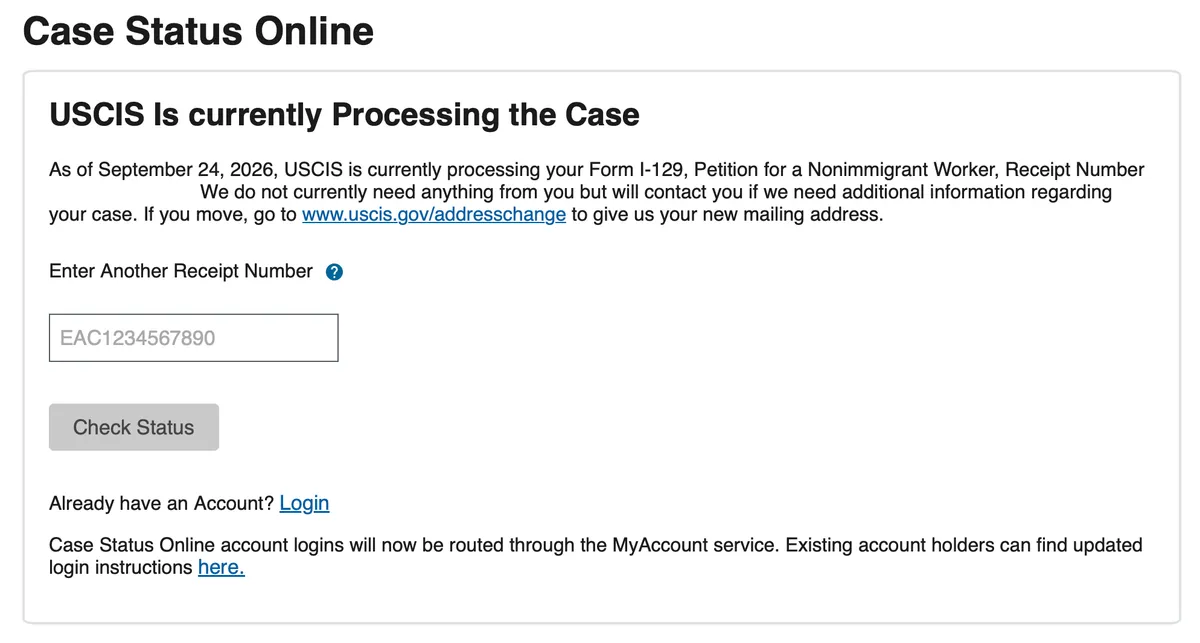
The petition went in on September 22. That was day 40 of 60. I checked the USCIS case status page at least 20 times a day, making my anxiety worse than ever.
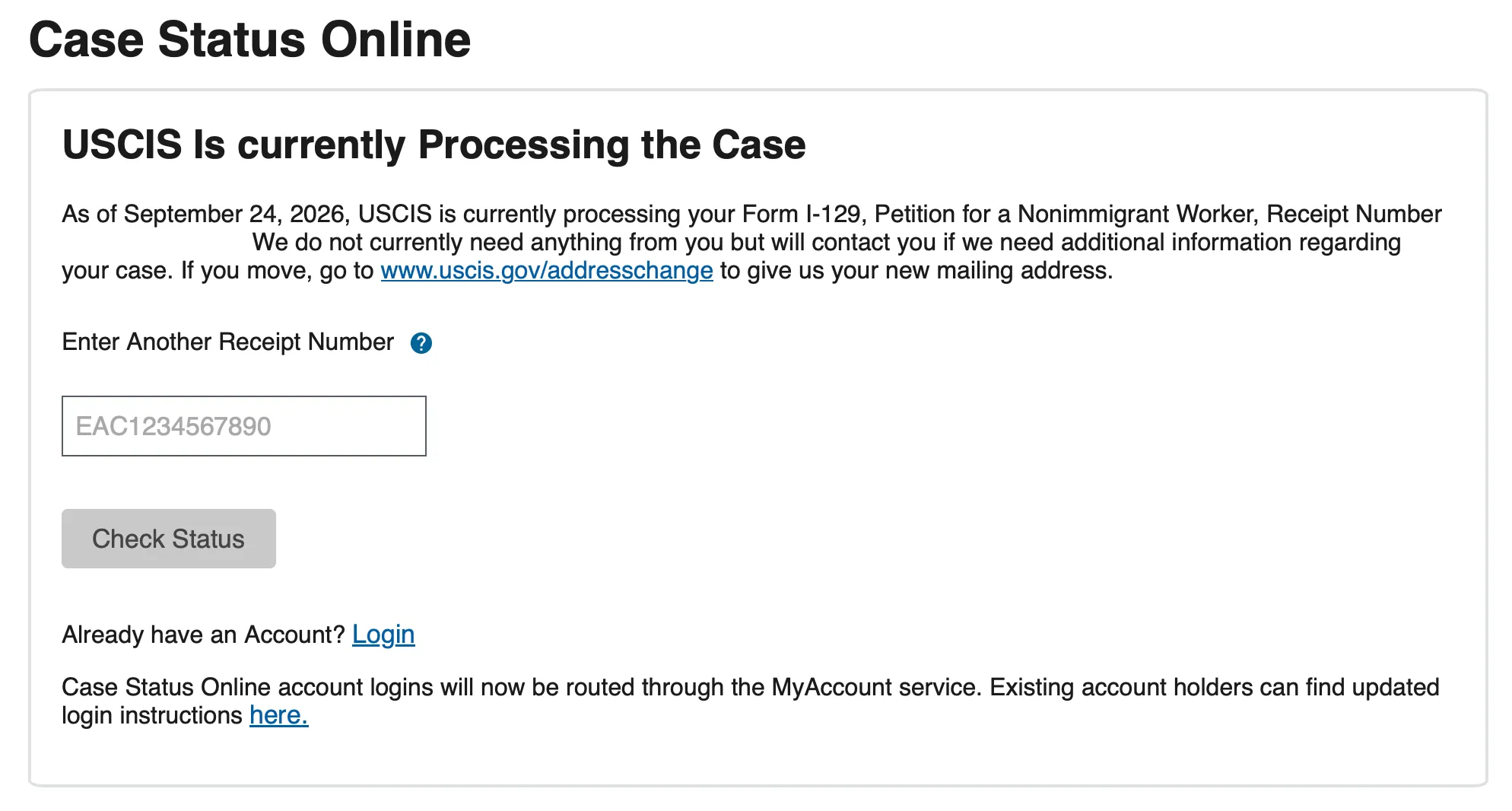
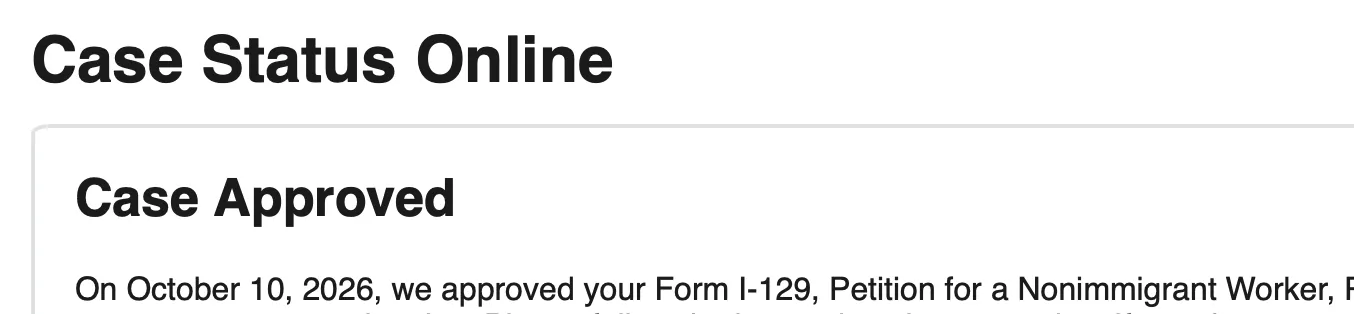
Around 9 p.m. on Friday, October 9, it said “Case Approved.” I didn’t expect a change that late in the day. I had checked at 5 and 6 p.m., and it was still in review.
In German we say “Mir fällt ein Stein vom Herzen”: a stone falls from my heart. This wasn’t a stone. It was a mountain. I’m emotionally and physically drained, but I feel so much lighter now.
Who Held Us Up
Most importantly, Lily. She supported me the whole way. She kept taking care of the kids when I couldn’t manage much, was in a bad place or needed to focus on the next big issue.
The people around us. Everyone was understanding, and everyone offered to help. The landlord shortened our lease. The school amended the contract, so if we had to leave the country, we wouldn’t have to pay school fees for the entire year. They kept asking if we needed anything. It takes a village, and our friends and neighbors were there for us.
A bunch of people from my network reached out, offering connections, job postings and help. People from my previous job introduced me to other companies that could use my skills. John went above and beyond. “No promises,” he said, and then set up calls the same day. Some were with advisors, some with people who could lead to work. Adam invited me to a private job platform and sent me several recruiter contacts to reach out to.
I always put energy into networking and helping others. I never expected it to come back. Some of those people were the ones who showed up for us.
Thank you to our friends and neighbors, and to everyone who helped us through these eight weeks.
What’s Next
Sam signed that first contract with me when nothing was certain yet. I won’t forget that.
In my previous job I took AI from zero to company-wide: the policies, and the conversations with 70+ people across sales, supply chain and project engineering about what they could now do with it. I led internal training and workshops. All of that now goes into Zentered Studios, and I’m going in with all new energy. If you need software development, AI consulting or training, let’s talk.
If you’re going through something similar, message me on LinkedIn or Bluesky. I don’t have answers, but I know what the waiting feels like.